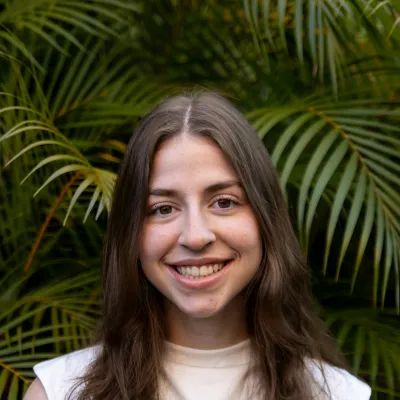

Aisha, 21, came to Centrepoint following a trauma within her family which meant she was forced to leave her home. After being placed in a hotel temporarily, she was moved to a Centrepoint supported home where she has been developing her confidence and independent living skills. She has recently been a part of the Duke of Edinburgh team creating a short film called 'Monster' and is preparing to shortly move into her own home.
Finding safety at Centrepoint
Aisha, 21, came to Centrepoint less than year ago, following a trauma within her family that meant she was no longer able to live at home. After being forced to move out, she was placed in a hotel for a few weeks before the local authority referred her to Centrepoint support.
Aisha, who is profoundly Deaf, felt nervous about moving into the supported home and was worried about being around new people and in a new environment, where they might not understand her or her needs.
“Before I came to Centrepoint, I had a trauma that was really bad, so I got kicked out of my mum’s house and I was put in a hotel for two or three weeks. And then I came here, and I was a bit nervous and shy because I’ve not really seen the people before that work here.”
However, after initially feeling nervous, she took the time she needed to settle into the space and started to feel more comfortable around the other residents and her key workers. From there, she felt more able to get involved with activities around the home, relaxing into the space and beginning to enjoy her time there.
“I got a bit nervous talking to staff and other people because it was my first time being here. And then after a while of being here, I started to get comfortable with people and enjoying being here.”
Getting the right support
For Aisha, despite feeling the potential double negative impact of being in a new space and being around people who might not know how to appropriately communicate with her, she found out very soon just how supportive her team were, and her worries quickly passed. They made sure to take the time to understand her Deafness, how she wanted to communicate and what they could do to ensure that she can access everything she needs.
“Since I’ve been here, everyone’s been really supportive, and I have very good communication with them. They really understand that I’m profoundly Deaf and the right way to interact with me.”
Aisha’s key workers listened to her concerns, and together they came up with plans and actions that suited her – making sure to be flexible and adaptive to find communication methods that are suitable and can work in all situations. Aisha has a cochlear implant fitted, but oftentimes when she is alone, will turn it off and her key workers have had to make sure that however they communicate it would be effective for her at any given time.
“My first key worker was Victoria, and she was really lovely and then I had a worker called Tina. She was really brilliant with me because she understands that I am Deaf and when she came into my room she would text me first, because sometimes I don’t have my ears on. She tends to send me a message for a key work session or a room check. What she does then is she rings my doorbell and if I don’t answer, then she might come in and flick the light so she can get my attention, and I know that someone is there.”
Tina recognised that there were many aspects of living in the supported home that posed a potential risk to Aisha and meant that she didn’t have the appropriate access requirements she needed to feel safe. One major element was that during the night, when she turns her cochlear implant off, she wouldn’t know if the fire alarm had been triggered, which could be potentially very dangerous.
Recognising the potential harm this could cause, they applied for the Centrepoint Bursary, so that Aisha could get the funds to buy a vibrating alarm clock, that doubled up as a fire alarm. This is connected to the building’s fire alarm, and if triggered, she would be woken up and alerted to the fire. Having this and knowing that her team have found ways to ensure she feels safe, helped to reduce some of the worry she was feeling, especially at night. It has also opened up vital conversations around her home, and supported homes in other areas, to ensure that teams feel confident in responding to a range of different accessibility requirements.
“She’s been helping me because I asked for a bit of support because she knew that at night-time, I wouldn’t be able to hear the fire alarm if I didn’t have my hearing aids in. I was really frightened so she got me a fire alarm, and it has been helping me so much and I’m really grateful for her for helping me and giving me the accessibility that I needed.”
“It’s an alarm clock but it has a big vibration so I can put it under my pillow in the night-time. Then if the fire alarm goes off, it will trigger the alarm clock and wake me up.”
Due to the trauma she experienced in her family home and the long-term psychological impact this has had, Aisha often finds it hard to trust people, especially new people coming into her life. However, now she has settled in and has seen how dedicated her team has been in making sure that she accesses support in the way that she wants, she has started to trust them and open up about herself, seeing that her home is the right, and safest, place for her to be.
“I have a bit of a trust issue with some people that I don’t know but this place is actually the safest place for me, and I have people to speak with if I had any troubles during the day. Especially at night-time, if I start to feel lonely, sometimes I come to see the night worker and have a good little chat before I go to bed, which is brilliant.”
Duke of Edinburgh short film
Over the last few months, Aisha has been involved in the production of a short film that young people in her supported home were creating as part of their Duke of Edinburgh award. After chatting with one of the service workers in passing, he suggested that she get involved, meet a few of the other young people in her home and grow some new skills she hasn’t been able to try out before.
“I heard about this film after I bumped into Jay. I was just saying hello like usual when I walked down the block and he told me about the project they were doing and a bit about Duke of Edinburgh. And then he told me about it, and I got really interested and I said to him that I wanted to join in and see how it goes, and he got me in for it.”
Jay introduced her to the team who were writing, producing and acting in the film, many of whom she had never met before. She initially felt nervous to interact with new people, similar to how she felt after she began working with her key worker. However, after talking to them, really understanding what the aim of the project was and finding ways to communicate that worked for everyone, she began to feel a lot more comfortable and was excited to begin.
“Since the day that happened, I met a few people that I’ve never seen before from different blocks. I met them and I got a bit shy because I don’t really know them, but as soon as I was talking to them and understanding what we were doing, I started to get comfortable with them and understanding what the role was and interacting with people and what we can do to communicate.”
After everyone was assigned their roles for the project, Aisha put herself forward for the position of assistant director – making sure that the actors and camera operator were in the right place at the right time to capture the shots they needed.
“I was the first assistant director – I made sure that everyone was in the right place before the scenes were actually recorded. I made sure the practice run was fine so that they can get it into their head and know what they need to act out. And then as soon as they’re done with the acting, I used the clapper bar to make sure they understood that the camera’s weren’t running.”
The film, which centred around the cycle of abuse and the impact that it can have for families, and the people close to them, aimed to share information on available support and that it is possible to break this cycle.
“It gave out messages to everyone that if they have struggled it can help other people to understand what they’re going through and how they’re coping with traumas or other issues they have inside them and how this can play out – and that there are people there for them.”
Now that the film has wrapped up and been shared with people in the local community, Aisha has reflected on the impact of the experience. She’s proud not only of the final product but also of the personal impact of being involved – feeling more confident and comfortable in interacting with others.
“Now I’ve done the film project and interacting with people – it’s such a brilliant project that we produced together and I’m so thankful for it.”
“I’m really proud of it because if I did not do it, I would still be anti-social, and I wouldn’t be able to interact with people or go out. But since I’ve done that film project, I actually feel more confident in engaging with other people and understanding what people want and how they can help.”
From never having taken on a challenge like this, to seeing first-hand the skills she has developed, she feels another level of pride in putting herself out there to try something new. She didn't know what to expect from taking on this experience and is now excited to take on similar opportunities in the future.
“This was my first time doing something like this – as soon as I got introduced to it, I was really interested. I wanted to do it so I can see how it goes, and I actually feel proud of myself for pushing through that challenge.”
Developing her skills
Alongside being a part of the film production, Aisha has also worked with a Centrepoint trainer to help her develop some of her skills around maths. She’s been grateful that Tom has really taken the time to understand how she learns and what she would value in the support he provides.
“I’ve worked with Tom for my maths, and he’s been really helpful to me because I have learning difficulties. What I do is every time I read the questions, I read it too quickly and I get the answer wrong. But he’s been helping me and slowing me down and making sure I actually read the questions and then answer correctly.”
Now that she’s gained a bit more confidence in her comprehension skills, she’s been working closely with her key worker to develop and grow her comfortability around managing her finances, which will help support her as she moves into her own home.
“It’s been helpful for me being here because I can learn to do the rent and my service charge and making sure I actually save enough money for the future, if I want to move out. It’s been really good.”
Having different areas of support and knowing that there are always people around to help with any questions, as well as opportunities to get involved with different activities, has been a positive environment for Aisha.
“This place has actually been brilliant because of all the things I’ve been doing since I’ve been here.”
Accessing support as a Deaf person
Aisha has been Deaf since birth and was the only Deaf person in her family growing up which often made communication challenging. At a young age, she was given hearing aids, but due to ongoing ear infections these weren’t a long-term solution and when she was seven, it was agreed that she would have an operation to fit a cochlear implant.
“Ever since I was born, my mum and dad were struggling to communicate with me because I had no sense of hearing. The hospital gave me hearing aids, but I started having ear infections because they weren’t suitable and when I was 7 everyone know I was going to have operation.”
When she first came back to school and was no longer wearing her hearing aids as she prepared for her operation, she became quite insular, distancing herself from others and feeling overwhelmed by her situation.
During this time of uncertainty and great change, her school made sure that she, and her classmates, were given sign language lessons to make sure that everyone was able to communicate and she didn’t feel singled out. Having that comfort in being able to communicate with those around her, meant that she felt a bit more comfortable in the school environment and could continue with her education, with some of the barriers reduced.
“My school was brilliant because they decided to teach me some sign language because my operation so that I can have some basic sign to understand other people through signing or lip reading and body language.”
“When I came back to school, it was very very quiet. I became anti-social because I had no hearing aids, and I couldn’t understand anyone. But the teachers taught the children to sign for me so I could understand then.”
The world Aisha wants to see is one where hearing people know the impact they can have if they work with Deaf people to find a way that works to communicate. From learning some basic sign language to making sure to direct all conversations face-to-face, taking these steps and being more conscious of how you communicate can help to improve access to all people. She urges people to try to educate themselves a bit more about the Deaf community to help improve accessibility and mean that no one feels left out.
“I would give advice that if people do see a Deaf person in town, just make sure that the person is looking at you before you start talking to them, because you never know if they’re going to be able to hear your or not. If people could learn some sign language, it would be brilliant for the Deaf community to have that accessibility of communicating with the hearing people.”
Planning for the future
For as long as she can remember, Aisha has always had a passion for travel, both as something she enjoys personally and potentially professionally. At college she secured two qualifications in travel and tourism which she hopes she can put into use to help people plan their holidays and give her the opportunity to see the world.
“I would love to travel around the world just to see different destinations that I haven’t been to and maybe work in an airport, because I have two qualifications in travel and tourism.”
Alongside this interest in the world of tourism, Aisha has been drawn to a career in childcare, having supported her younger siblings from a young age.
However, for Aisha, her main goal is to one day have her own home, which is filled with warmth and laughter.
“Hopefully in the future, I will have a really nice, safe place to call my own home that I can go to and have people to spend time with and have a good laugh. That’s what I’m hoping for in the future.”
She’s already on her way to moving into her own space and is working with her key worker to identify potential housing options. Although she’s excited to have her own home, she’s also sad to say goodbye to everyone she’s built connections with in her supported home.
“I feel excited by a bit sad because I’m going to miss all the people, I work with and seeing the people I hang out with all the time. But I am excited to move out into my own first home because I want to have my own space and be able to learn new skills on my own.”
From her key workers to the people she met whilst working on the short film, she’s developed friendships that have helped her feel more comfortable with socialising and interacting with hearing people. After experiencing traumas in her past which have sometimes meant she has struggled to build these connections, through the support she's received she's begun to feel more confident in communicating her needs, seeing the progress she has made and the difference in how she navigates the world.
“It makes me feel happy to interact with my friends because I can get more socialised. Because of my past traumas, I’ve been antisocial around people because I can get really paranoid because I’m Deaf. It’s been difficult for me to interact with hearing people. I’ve only been doing that for the past few years, and now I’m getting slowly back into the routines in understanding hearing people and making sure that they’re aware that I’m Deaf and making sure they face me so I can understand.”
We wish Aisha all the best with moving into her own flat and with her vision of a more equitable world for Deaf people in the future.
Make a donation
With your donation, we can support more young people like Aisha to access the support they need to be independent.